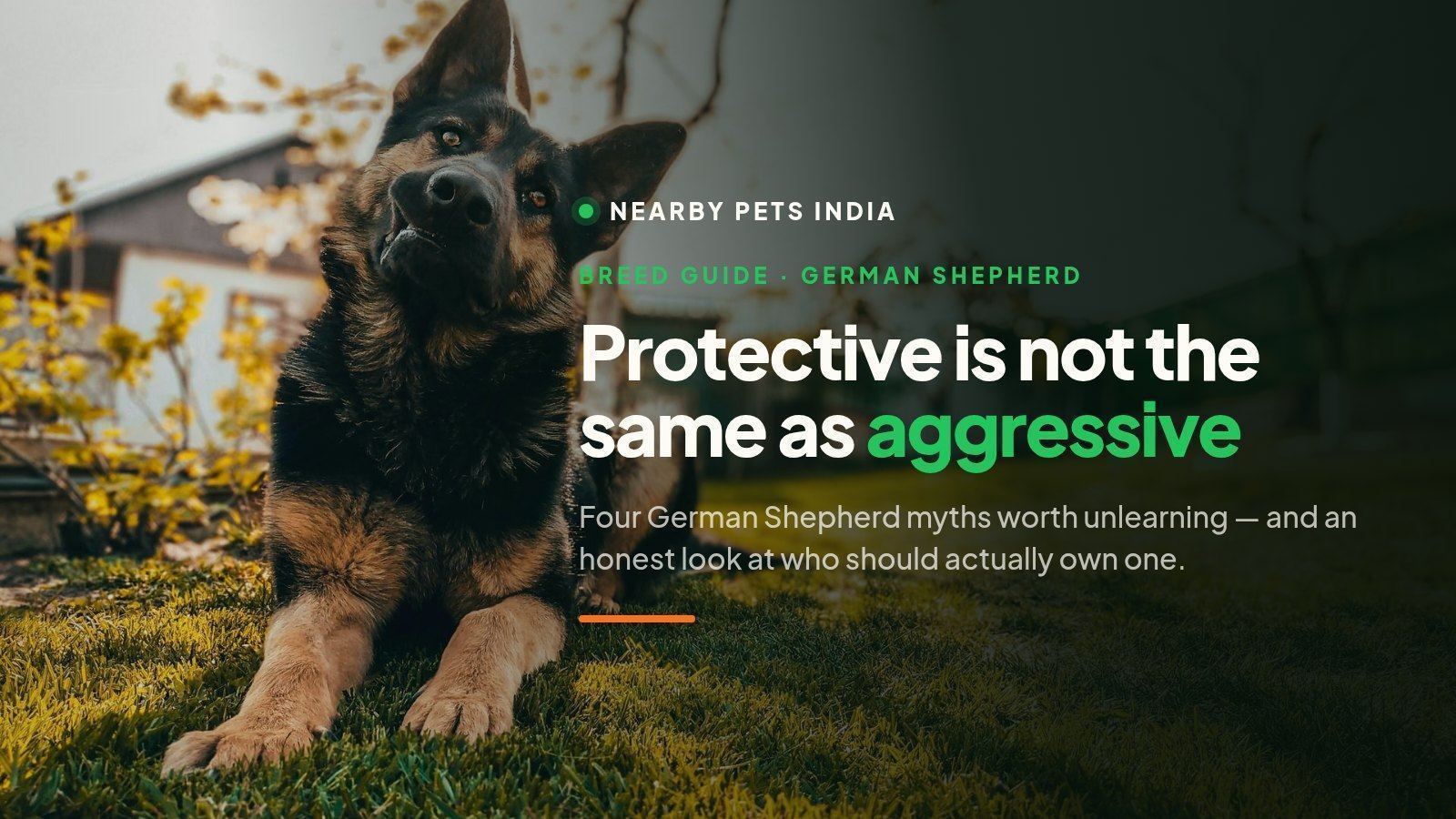
Ask anyone in India about a German Shepherd and you'll get one of two answers. Either it's the smartest, most loyal dog alive — or it's the one that bit someone's cousin. Both stories get told with total confidence, and neither is really about the breed.
The German Shepherd is a guarding and herding dog built for alertness, and that instinct is not a defect to train out. But protective and aggressive are two different things, and confusing them is how good dogs end up chained on terraces.
This guide covers where the breed actually came from, the four myths worth unlearning, an honest answer on aggression, what Indian heat means for a double coat, and the case for not getting one.
A breed barely 125 years old
The German Shepherd is a modern, deliberately engineered breed. In 1899 a former cavalry officer named Max von Stephanitz saw a working sheepdog at a show, bought him on the spot, and registered him as Horand von Grafrath — the first German Shepherd. Every dog in the breed traces back to that founding programme.
Von Stephanitz selected for working ability above appearance. His stated principle was blunt: a shepherd dog should be judged by what it can do. That single decision is why the breed spread into police work, military service, search and rescue, detection and assistance work within a few decades — and why the first guide dogs for blind handlers were German Shepherds, starting with a dog named Buddy in 1928.
One local quirk: for much of the twentieth century Indians called them Alsatians. That name came from post-WWI Britain, which renamed the breed after the Alsace region to avoid the word "German." The Kennel Club dropped the rename decades ago, but in India the older word stuck — plenty of families still say Alsatian and mean exactly this dog.
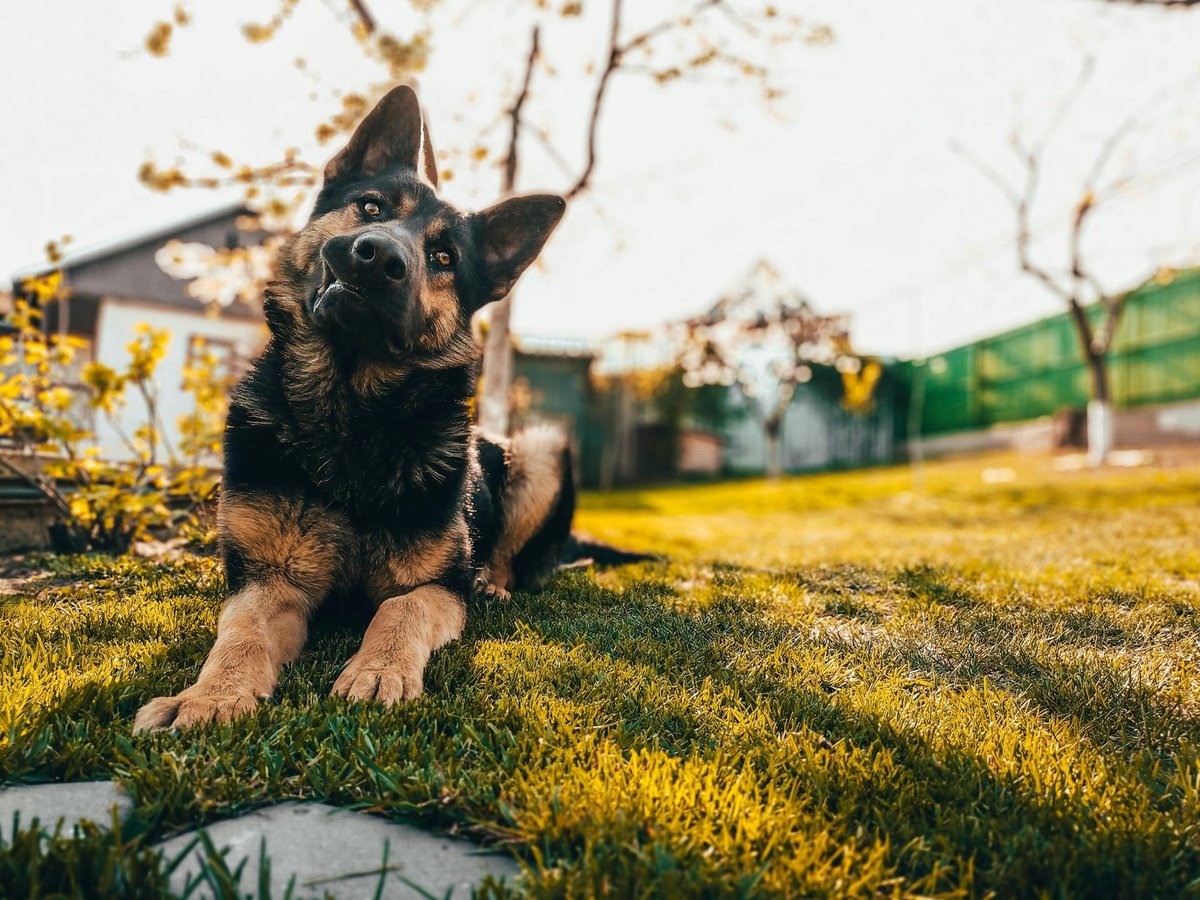
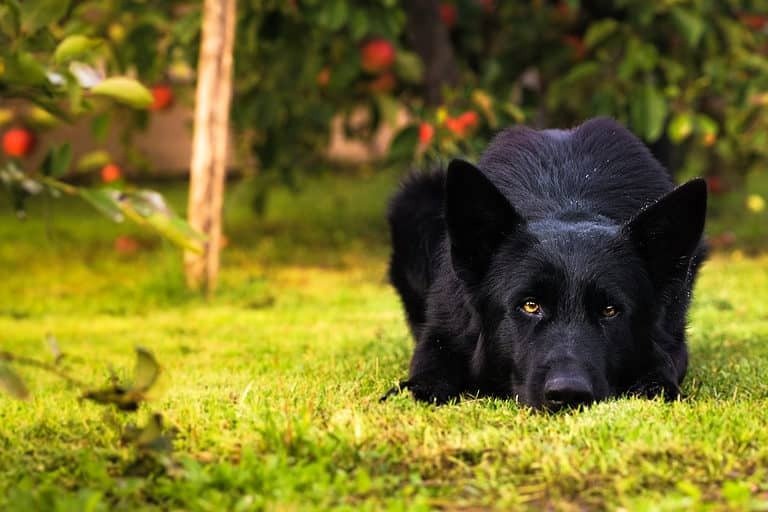
Seven things that surprise new German Shepherd owners
- They are working-intelligent, not just clever. German Shepherds rank third among breeds for working and obedience intelligence, and most learn a new command in fewer than five repetitions. That cuts both ways — they learn your bad habits just as fast.
- They shed constantly. The double coat drops hair all year and blows out heavily twice a year. "German Shedders" is an owner joke, not an exaggeration.
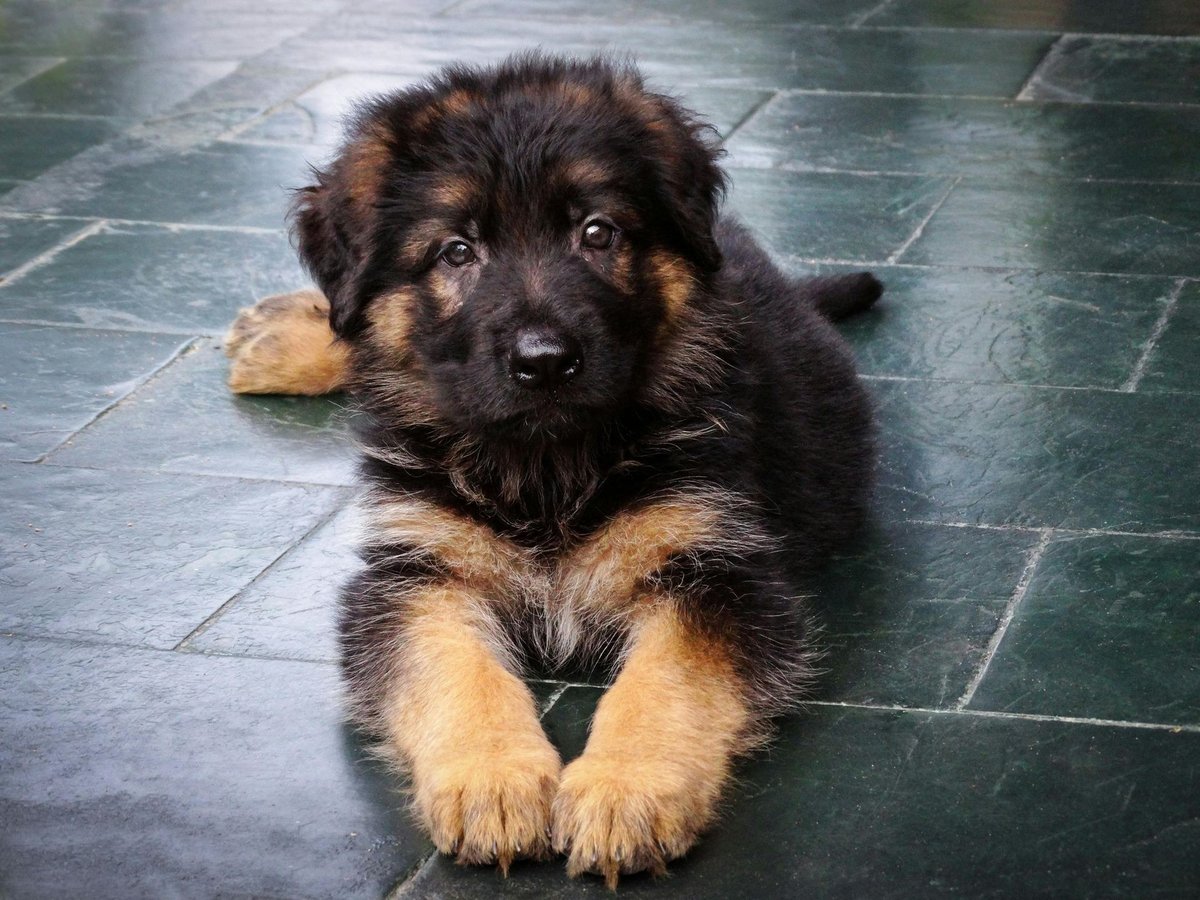
- Two coat lengths are normal. Stock coat and long coat both occur naturally in the breed. A long coat is not a mix or a defect, though some show registries treat it differently.
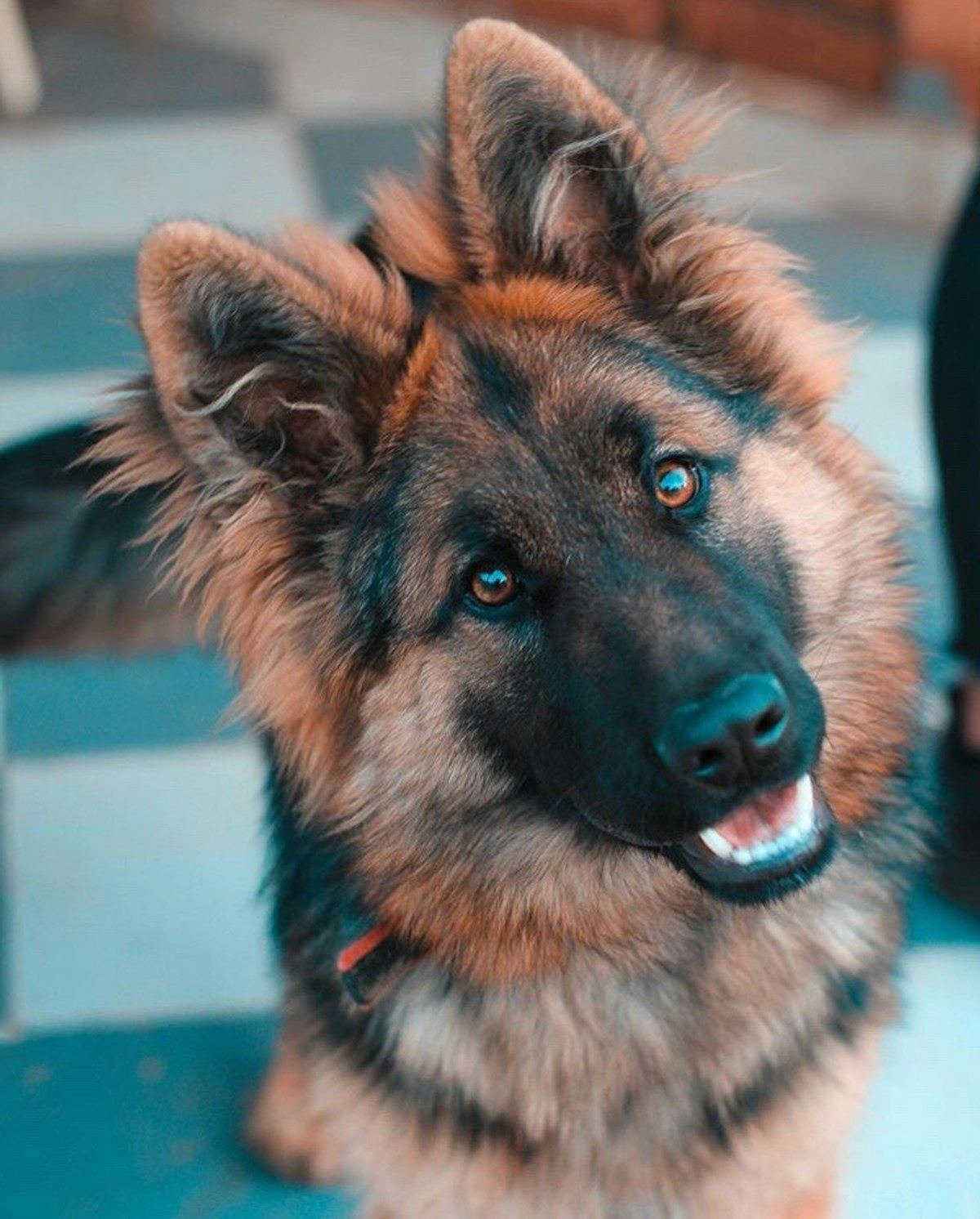
- Puppy ears do strange things. They flop, then one goes up, then both, often between 8 weeks and 6 months. Uneven ears during teething are usually nothing to worry about.
- They are famously "velcro" dogs. A GSD wants to be in the room with you. This is a bonded, people-oriented breed, not a yard dog.
- The sloped back is controversial. The extreme rear angulation seen in some show lines is a modern development and is widely criticised on welfare grounds. Working-line dogs are typically straighter-backed.
- They mature slowly in the head. Physically grown by about 18 months, but many stay mentally adolescent — goofy, testing boundaries — until closer to three.
Four German Shepherd myths, corrected
Myth 1: "German Shepherds are born aggressive"
False. The breed standard calls for confidence, steadiness and good nerves. A dog that is fearful, reactive or unpredictable is failing the standard, not fulfilling it. Real aggression in a GSD usually traces to one of three things: poor breeding for temperament, a missed socialisation window, or a dog kept isolated and under-stimulated. All three are human decisions.
Myth 2: "They suddenly turn on their owners"
False. Dogs don't flip personality. What people read as "sudden" is almost always a chain of ignored signals — stiffening, a hard stare, a lifted lip, a growl that got punished instead of heeded. And a dog that has been taught not to growl hasn't become safer; it has simply lost its warning. If a previously steady Shepherd starts snapping, treat it as a medical question first: pain, thyroid, vision loss and neurological issues all present this way.
Myth 3: "You have to be the alpha and dominate them"
False, and this one causes real harm. Dominance theory came from studies of unrelated wolves forced together in captivity in the 1940s. Wild wolf packs are simply families, and David Mech — the researcher whose book popularised "alpha wolf" — spent years publicly asking his publisher to stop reprinting it. Applied to a powerful guarding breed, "show him who's boss" advice produces alpha rolls, scruff shakes and pain-based corrections that build fear. Fear is what bites. Reward-based training is both kinder and measurably more effective.
Myth 4: "Shave the coat to keep them cool in an Indian summer"
False, and a genuine welfare risk. A double coat is insulation in both directions: the undercoat traps air that slows heat transfer in as well as out. Shaving it removes that buffer, exposes skin to direct sun and risks sunburn, and in many dogs the coat grows back patchy or permanently altered. Manage heat with shade, airflow, water and timing — not clippers. Brushing out the dead undercoat is the correct summer intervention.
Are German Shepherds aggressive?
No — a well-bred, well-raised German Shepherd is protective, not aggressive, and the distinction is practical rather than semantic.
A protective dog notices, assesses and alerts. It positions itself between its family and the unknown, barks at the gate, and then settles when told the situation is fine. An aggressive dog escalates without assessment, cannot be called off, and treats ordinary events as threats. The first is the breed working as designed. The second is a dog that was failed somewhere.
Being reserved with strangers is normal, correct GSD behaviour. A German Shepherd that greets every visitor like a Labrador is unusual for the breed. Aloof is not hostile — the dog should tolerate a stranger's presence calmly while remaining watchful.
Where it goes wrong is training and socialisation. The critical socialisation window runs from roughly 3 to 16 weeks, and what a puppy meets in that period does more to shape the adult dog than anything you do afterwards. A guarding breed that never learned the difference between a delivery rider and an intruder will default to treating both as intruders. Combine that with 40 kilos of drive and no outlet, and you have a genuinely difficult animal.
This is why we say plainly: a German Shepherd is not a beginner's dog. It rewards a committed owner more than almost any breed, and punishes a passive one more than most.
Living with a German Shepherd in India
Heat is the constraint that catches people out
A double-coated working breed and 42°C afternoons are a poor combination. Walk early morning and after dark, never in the middle of the day, and check the tarmac with the back of your hand before you set out — if you can't hold it there for seven seconds, it will burn paw pads. Keep water available in more than one room. Watch for heavy panting that doesn't settle, drooling, wobbliness or brick-red gums, and treat heatstroke as the emergency it is. Do not shave the coat.
Exercise is not optional
Budget 60–90 minutes of real activity daily, and understand that physical exercise alone won't do it. This breed needs work for its head: scent games, training sessions, puzzle feeders, a job with rules. A bored German Shepherd doesn't become calm — it becomes destructive, vocal and anxious.
Health: ask about the parents before you ask about the puppy
German Shepherds have a well-documented predisposition to hip and elbow dysplasia, and responsible breeding programmes screen and score for it. Ask what screening the parents had and ask to see the results. The breed also carries risk for degenerative myelopathy (a DNA test exists) and, because of its deep chest, for bloat / gastric torsion — learn what bloat looks like before you need to recognise it, because it kills within hours.
The legal position
Worth knowing: German Shepherds are not on the central advisory list of restricted "ferocious" breeds circulated in India in 2024, which named breeds such as Pitbull Terrier, Rottweiler and Cane Corso. Some housing societies still impose their own rules, so check your society bye-laws before bringing any large dog home.
The honest fit check
A German Shepherd is a great match if: you can give 60–90 minutes of daily exercise; you'll keep training past the first obedience course; someone is home for much of the day; you want a dog that works with you rather than around you; and you can budget for hip and elbow screening plus real food for a large dog.
Reconsider if: this is your first dog; shedding on every surface would bother you; the house is empty ten-plus hours a day; you want a guard dog you don't have to train; or you can't keep a large double-coated dog comfortable through summer.
The blunt version: a German Shepherd will meet you at your effort level and nowhere above it. Give it structure and a job and it is one of the finest dogs on earth. Leave it alone in a yard and it will become a problem — and that will be a failure of ownership, not of breeding.
Bringing one home
We currently list a German Shepherd Puppy (NPI-DOG-026) at ₹21,000, available in Mohali, Punjab with delivery across India. Vaccination and deworming status is shown on the product page and is worth reading in full before you enquire — ask us directly about the remaining vaccination schedule and about the parents' hip and elbow scores.
You can browse all available puppies and dogs, or read more in our dog care articles. And if your routine doesn't suit this breed, tell us — we would rather point you to a better-matched dog than sell you a Shepherd you can't exercise.
The Nearby Pets India app notifies you when a breed you're watching becomes available in your city — plus order tracking and direct chat with our team.
Get the app on Google Play →Frequently asked questions
Are German Shepherds aggressive dogs?
No. A well-bred, well-socialised German Shepherd is protective rather than aggressive — alert and reserved with strangers, but steady and controllable. Genuine aggression in the breed usually traces to poor breeding, missed early socialisation, or isolation and boredom.
Are German Shepherds good with children?
Generally yes, with their own family's children, when raised with them and supervised. They are large, fast and mouthy as puppies, so interactions with toddlers need managing — as with any big breed.
Can a German Shepherd handle Indian summers?
Yes, with management. Keep them indoors during peak heat, walk early morning and after dark, provide constant water and airflow, and never shave the double coat — it insulates against heat as well as cold.
How much does a German Shepherd puppy cost in India?
It varies with lineage, location and breeder quality. Our current German Shepherd Puppy listing is ₹21,000. Be cautious with unusually cheap puppies — health screening of the parents is where responsible breeders spend money.
Is a German Shepherd a good first dog?
Usually not. They are highly trainable but demanding: 60–90 minutes of daily exercise, continuing training, heavy shedding and a strong guarding instinct that needs early socialisation. First-time owners often do better with a less demanding breed.
Do German Shepherds shed a lot?
Yes — constantly, with two heavier seasonal moults. Brushing several times a week is necessary, and daily during a coat blow.
What is the difference between a German Shepherd and an Alsatian?
There is none. "Alsatian" is an older name adopted in Britain after the First World War to avoid the word "German." It remains in common use in India, but it refers to the same breed.