Pick up a Ragdoll and something slightly unnerving happens. The cat doesn't brace, doesn't kick, doesn't twist out of your grip. It goes soft — head tipped back, legs hanging, the whole animal draped over your forearm like a warm towel. It is the single most famous thing about the breed, and it is where the name came from.
It is also the source of a myth that has done real harm to real cats.
This guide covers what the flop actually is, the four myths worth unlearning, whether Ragdolls are ever aggressive, and — the part most breed guides skip — the honest case for not getting one.
The flop, and the myth that hurts cats
The limpness is a relaxation response. A well-socialised Ragdoll that trusts the person holding it releases muscle tension instead of bracing against restraint. Most cats do the opposite: being lifted triggers a low-grade threat response, so they stiffen and look for the ground.
Somewhere along the way this got retold as "Ragdolls go limp because they can't feel pain." That is false, and it is the most important sentence in this article.
Ragdolls have an ordinary feline nervous system. They feel pain exactly as much as any other cat, and — because they are unusually tolerant — they often show it less obviously. A stoic cat that doesn't struggle is not a cat that isn't hurting. It is a cat that is easy to injure without noticing, and easy to miss an illness in. Handle a Ragdoll the way you would handle any cat: support the hindquarters, don't dangle, and take a sudden change in behaviour seriously.
Where the breed came from
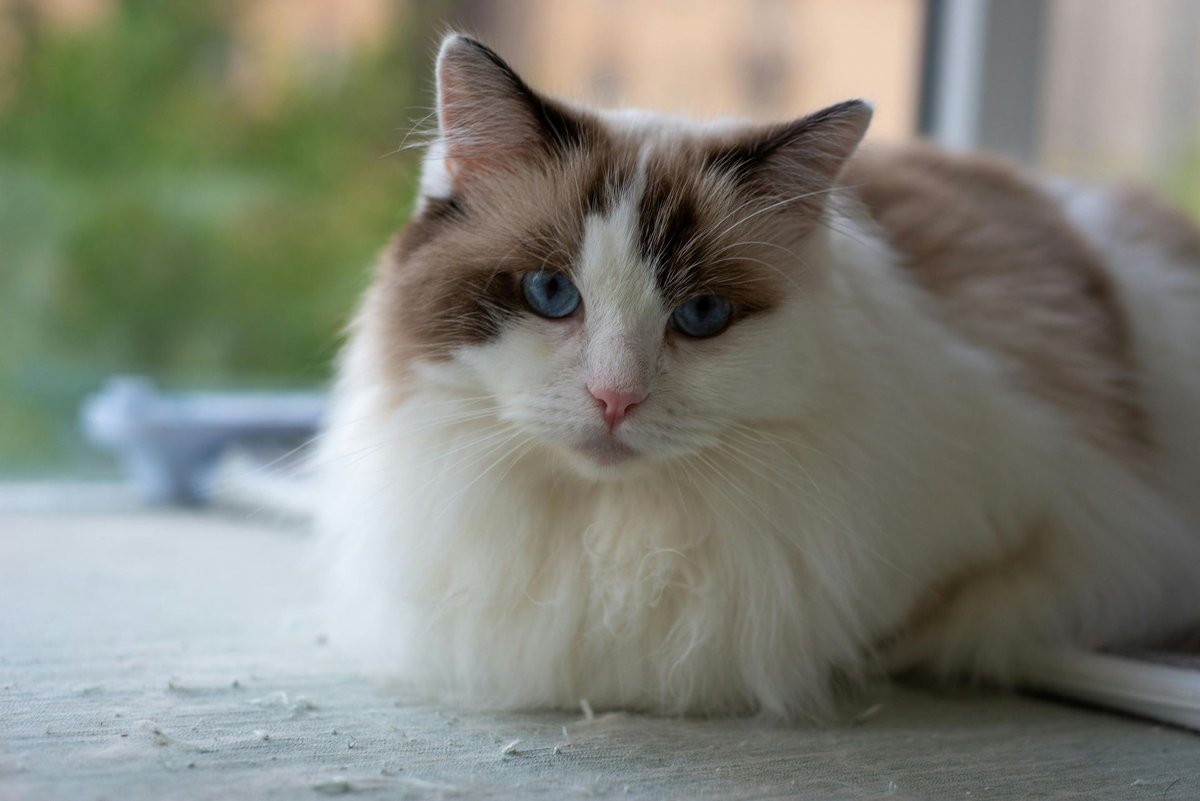
Ragdolls are a modern, deliberately engineered breed. They were developed in Riverside, California in the 1960s by a breeder named Ann Baker, who selected specifically for size, a placid temperament and the pointed, blue-eyed look. Nearly every Ragdoll alive traces back to that small founding group.
That matters for one practical reason: docility in this breed is the product of deliberate selection, not training. You are buying a temperament that was bred in — which is exactly why it comes with trade-offs that a scrappier cat doesn't have.
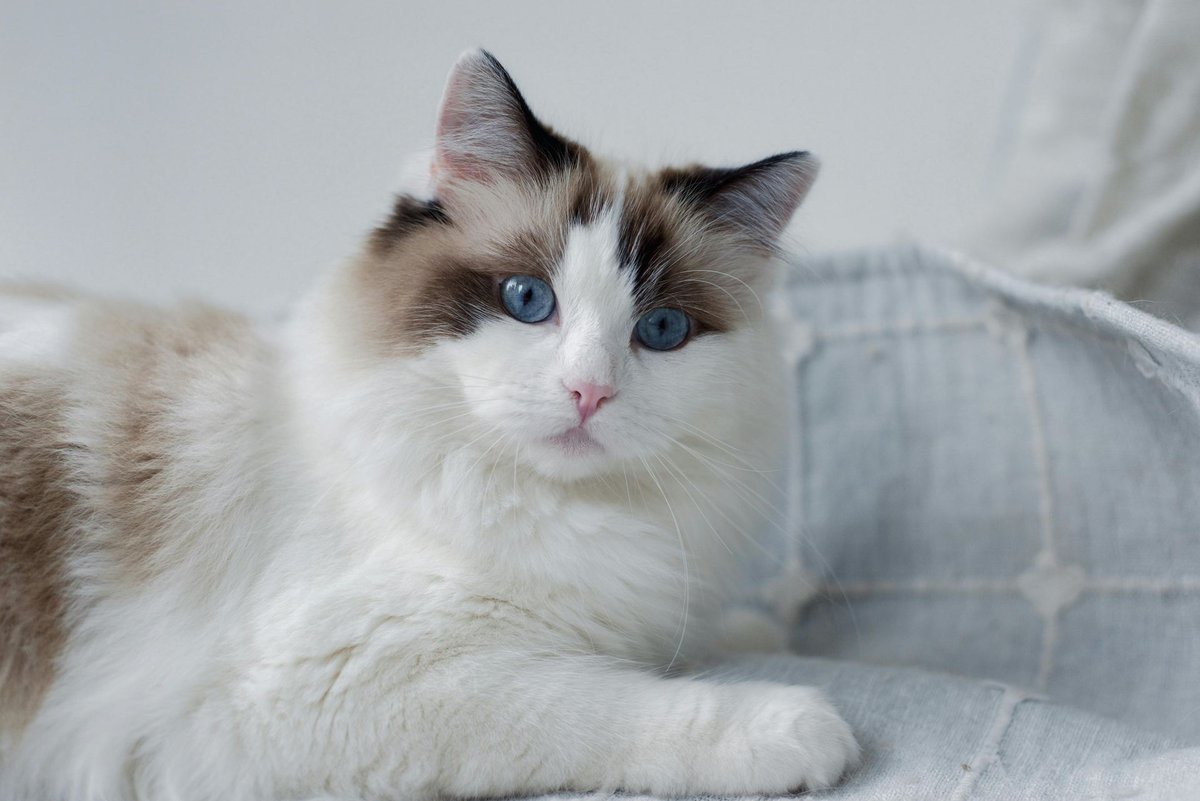
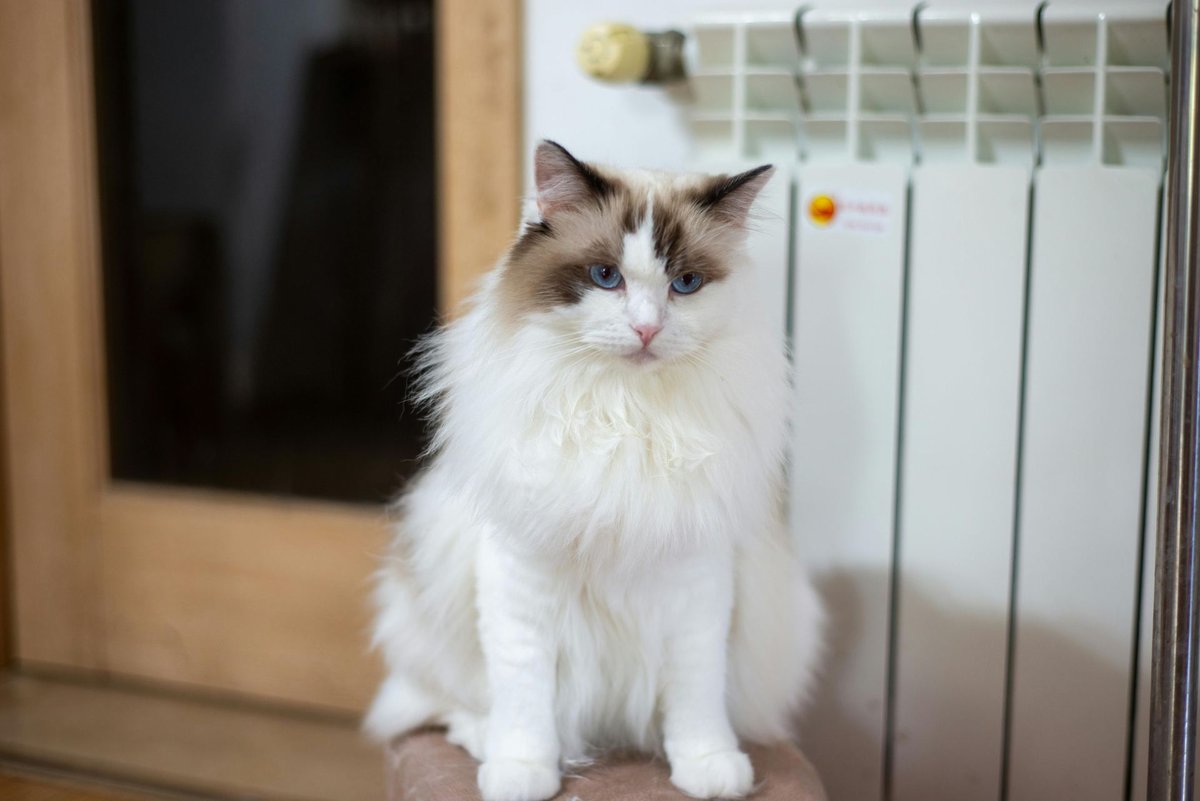
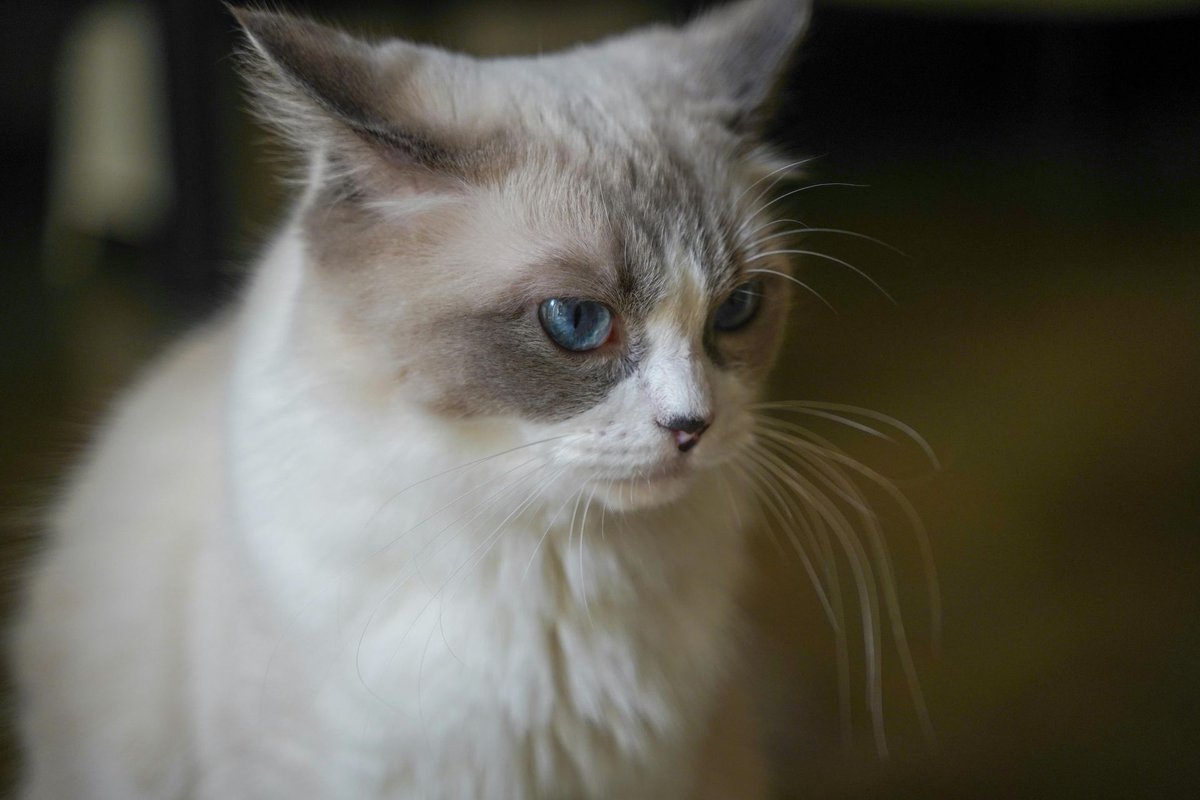
Seven things that surprise new Ragdoll owners
- They are genuinely large. Males commonly reach 7–9 kg and keep a long, rectangular frame. This is one of the biggest domestic cat breeds — plan for a bigger litter tray and a sturdier cat tree than you think you need.
- They mature slowly. Full size, full coat and full colour can take three to four years. The cat you have at one year is not the finished article.
- Kittens are born pure white. The colour points develop gradually over the following weeks, which is why very young kittens all look alike.
- Blue eyes, always. Any purebred Ragdoll has blue eyes. Green or gold eyes mean it is something else, or a mix.
- They follow you. The nickname "puppy cat" is earned — they trail owners between rooms, wait outside bathroom doors, and many will fetch a thrown toy.
- They are floor cats. Ragdolls tend to be less obsessive climbers than most breeds. They will use a cat tree, but they are usually happier at your level than on top of the fridge.
- They are quiet. Ragdolls have soft, undemanding voices. If you want a chatty cat, look at a Siamese instead.
Four Ragdoll myths, corrected
Myth 1: "They flop because they can't feel pain"
False, and dangerous. Covered above — they feel pain normally and simply protest less. This myth leads directly to rough handling.
Myth 2: "Ragdolls are hypoallergenic"
False. No cat breed is hypoallergenic. Cat allergy is mostly a reaction to Fel d 1, a protein in saliva and skin secretions that spreads onto the coat during grooming — and Ragdolls produce it like every other cat. A long coat can even carry more of it around your home. If someone in the house is allergic, spend real time with an adult Ragdoll before committing to one.
Myth 3: "That silky coat never sheds or mats"
Half true, and the half that's wrong costs money. Ragdolls carry little undercoat, so they mat less than a Persian. They still shed, and they still need brushing two to three times a week — more during a seasonal coat change. Neglect it and you get pelted mats behind the legs and under the ruff, which usually end in a vet visit and a shave.
Myth 4: "They're lazy"
False — calm is not the same as inert. Ragdolls play, chase, stalk and fetch. They just do it in short, gentle bursts rather than tearing around at 2am. They still need daily play and enrichment, and a bored Ragdoll gains weight quickly on a large frame, which is hard on the joints.
Are Ragdolls aggressive?
Almost never — and among common pedigree cats, this is about as low-aggression as it gets.
Ragdolls were bred for tolerance. They rarely scratch or bite, they generally accept being picked up and carried, and they are one of the safest breeds around children and other pets. If you want a cat that will put up with a busy, noisy household, this is a strong choice.
The trade-off is the important part. A cat that won't defend itself and won't flee effectively is a cat with no safety margin outdoors. Ragdolls are poorly equipped for territorial fights with street cats, for dogs, and for traffic. They should be kept as indoor-only cats — with a secured balcony or a screened window if you can manage it. That is not a lifestyle preference for this breed; it is a safety requirement.
And a caveat that applies to every cat: temperament is a starting point, not a guarantee. Any cat that is frightened, cornered or in pain can lash out. A previously placid Ragdoll that suddenly bites is usually telling you something hurts — that is a vet appointment, not a discipline problem.
Living with a Ragdoll in India
Heat is the real constraint
A semi-long double-ish coat and Indian summers are not natural partners. Ragdolls cope far better indoors with fans, cooling and shade than most people expect, but they are genuinely at risk during peak heat. Keep fresh water in more than one room, avoid handling and play during the hottest hours, and watch for open-mouth breathing, lethargy or a very hot ear base. Never shave a Ragdoll down as a "cooling" measure without veterinary advice — the coat also insulates against heat and protects skin.
Grooming in humidity
Humidity accelerates matting. In coastal and monsoon-heavy cities, move to near-daily brushing during the wet months. A steel comb reaches the base of the coat where mats actually start; a soft slicker alone tends to skate over the top and miss them.
Find your vet before you need one
Ragdolls, like several pedigree breeds, have a recognised predisposition to hypertrophic cardiomyopathy (HCM), a heritable heart condition. Responsible breeding programmes screen for it. Ask about the parents' screening history, and register with a vet who is comfortable with feline cardiac cases before you bring a kitten home rather than during an emergency.
The honest fit check
A Ragdoll is a great match if: someone is home for much of the day; you want a cat that actively seeks you out; you have children or other calm pets; your home is fully indoor; or this is your first cat and you want a forgiving temperament.
Reconsider if: the house is empty ten-plus hours a day; you want an aloof, low-contact cat; brushing several times a week sounds like a chore; you wanted a cat that roams outdoors; or you are shopping for a hypoallergenic pet.
That first "reconsider" is the one people underestimate. Ragdolls bond hard and are among the breeds least suited to being alone all day. If your household is out from morning to night, a more independent cat — or a bonded pair, so they have each other — is the kinder choice.
Bringing one home
We currently list a Ragdoll Kitten (NPI-CAT-009) at ₹32,499, available in Mohali, Punjab with delivery across India. Vaccination and deworming status is listed on the product page and is worth reading in full before you enquire — ask us directly about the remaining vaccination schedule, and about the parents' HCM screening.
You can browse all available cats and kittens, or read more in our cat care articles. If you are still deciding between breeds, our team is happy to talk you out of a Ragdoll if your routine doesn't suit one — that conversation costs us a sale and saves a cat.
The Nearby Pets India app sends an alert when a breed you're watching becomes available in your city — plus order tracking and direct chat with our team.
Get the app on Google Play →Frequently asked questions
Do Ragdoll cats really go limp when you pick them up?
Most do, to some degree. It is a trust and relaxation response, not a medical condition — and it varies between individuals. Some Ragdolls flop completely; others simply stay unusually calm.
Are Ragdoll cats good for first-time owners?
Yes, provided you can meet the grooming and company requirements. Their tolerant temperament forgives the handling mistakes new owners make.
Can Ragdoll cats be left alone all day?
Not comfortably. This is one of the breeds most prone to distress when isolated for long periods. If nobody is home during the day, consider two cats so they have company.
How much does a Ragdoll kitten cost in India?
Prices vary by lineage, location and breeder. Our current Ragdoll Kitten listing is ₹32,499. Treat unusually cheap "Ragdolls" with caution — mixed kittens with blue eyes are frequently sold as purebred.
Do Ragdoll cats shed a lot?
They shed moderately. Less undercoat means less matting than a Persian, but brushing two to three times a week is still necessary — daily during humid months.
Are Ragdoll cats hypoallergenic?
No. No cat breed is. Ragdolls produce the Fel d 1 allergen like every other cat.