A sun conure is one of the most beautiful birds you can keep, and one of the most commonly rehomed. Both facts have the same cause. People buy the colour, in an afternoon, and discover afterwards that they have taken on a screaming, deeply social, three-decade commitment that will outlast most of the other decisions they make this year.
This guide is written to be read before the purchase rather than after it. It covers where the bird comes from, why yours is probably green, how loud "loud" actually is, the three things in an ordinary Indian home that kill pet birds, what it costs to keep one properly, and who should not buy one.
Sun conure at a glance
| Scientific name | Aratinga solstitialis |
| Lifespan | 20–30 years |
| Length | About 30 cm including tail |
| Weight | 100–120 g |
| Native to | North-eastern South America |
| Noise level | Very high. This is the deciding factor. |
| Out-of-cage time | 3–4 hours daily, minimum |
| Typical price in India | From about ₹10,500 for a hand-raised bird |
A bird named for the sun, and endangered in the wild
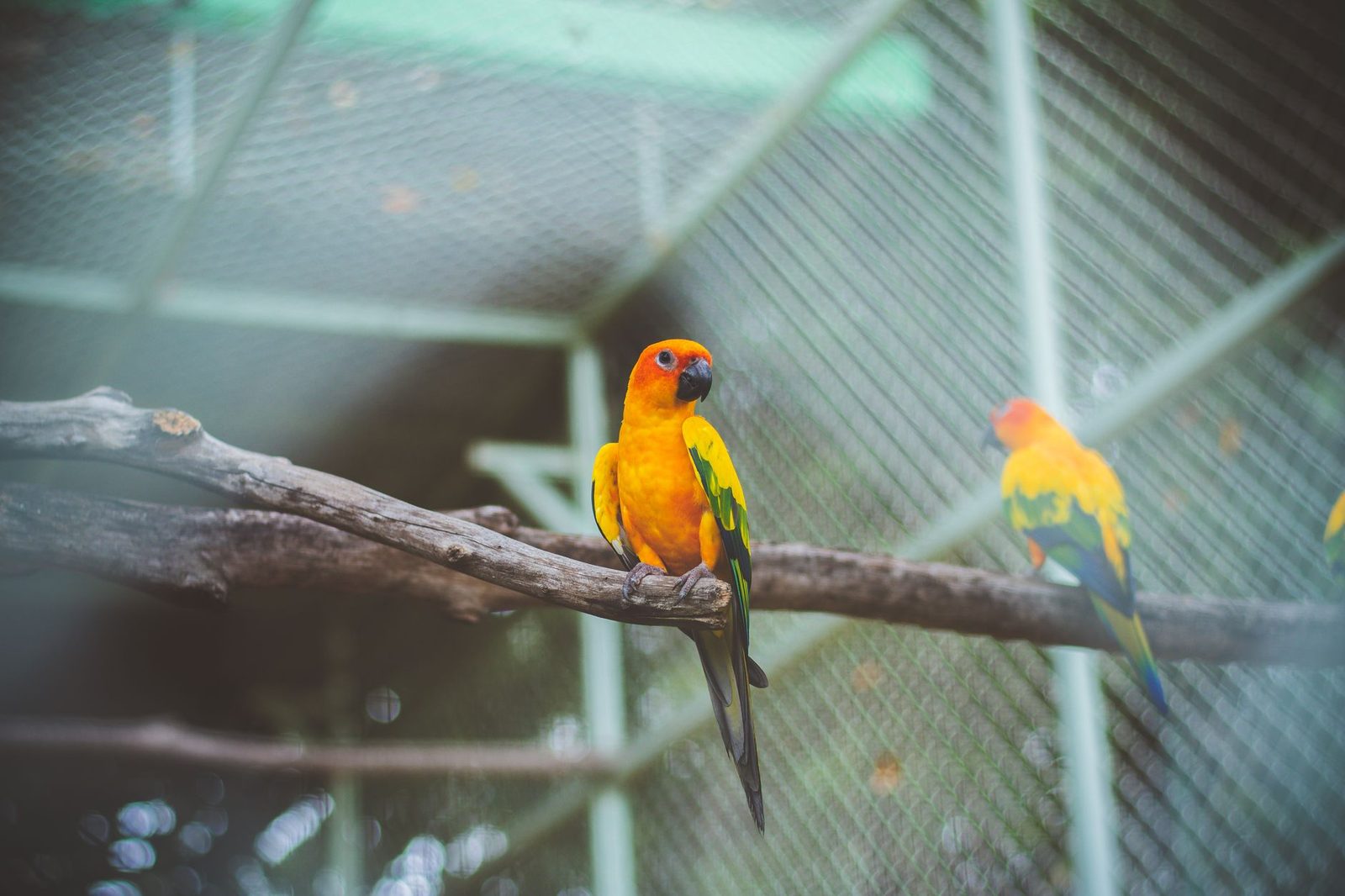
The sun conure comes from a relatively small range in north-eastern South America — Guyana, southern Suriname, the Brazilian state of Roraima and a corner of Venezuela — where it lives in flocks in dry savannah woodland and along forest edges. Its scientific name, Aratinga solstitialis, means roughly "of the summer solstice", which is as good a description of the adult plumage as anyone has managed.
Wild populations have declined sharply, largely through historic trapping for the pet trade and habitat loss, and the species is now listed as Endangered on the IUCN Red List. That fact matters to a prospective owner for a practical reason: every legitimately available pet sun conure in India is a captive-bred bird, several generations removed from the wild.
Buy captive-bred, and ask. A reputable Indian breeder or seller will tell you plainly that the bird is captive-bred and hand-raised, and will be able to say roughly when it hatched. Anyone vague about a bird's origin is someone to walk away from — both for the bird's sake and for yours, since wild-caught parrots are poorly socialised and rarely tame.
Why your sun conure is green
This is the single most common surprise for new owners, and it is not a problem.
Sun conures hatch olive-green. The brilliant gold, orange and yellow adult plumage comes in gradually through successive moults and is usually not complete until the bird is roughly eighteen months to two years old. A young sun conure is green across the back and wings with yellow beginning to break through on the head and body.
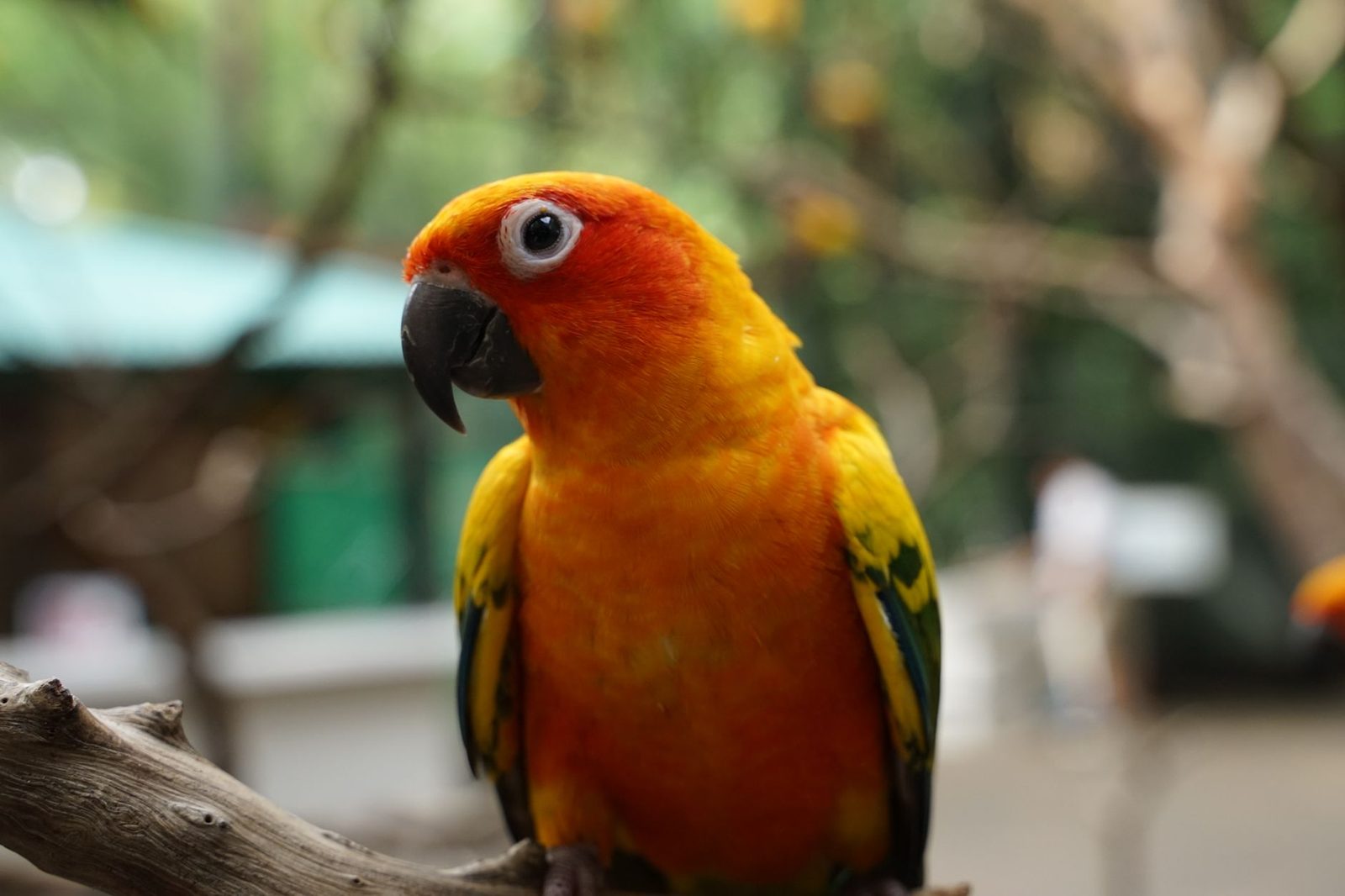
So if you buy a juvenile — which is what you want, because young hand-raised birds tame most easily — you are buying a green bird that will spend the next two years becoming the bird in the photograph. Be sceptical of anyone selling a "rare green sun conure" at a premium. They are selling you a baby at a markup.
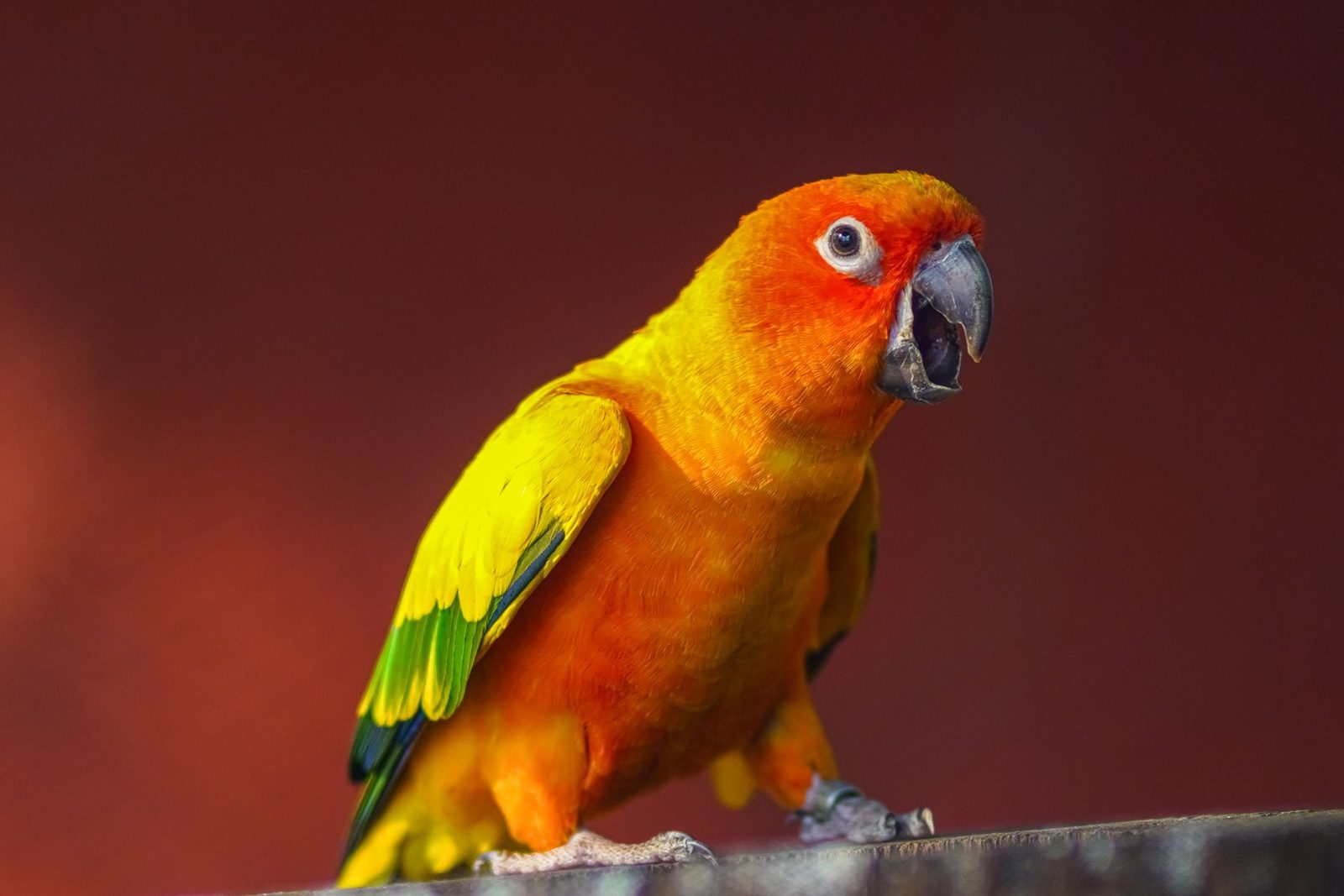
Two related identification points are worth knowing, because lookalikes are regularly sold as sun conures in India. An adult sun conure has a black beak and green confined largely to the flight feathers. A bird with a pale horn-coloured beak and uniform yellow body is likely a golden conure, a different and far more expensive species. A bird with a green back and a yellow-orange head is more likely a jenday conure. Neither is a bad bird — but you should know what you are paying for.
Just how loud is loud?
There is no gentle way to put this. The sun conure's contact call is a piercing, repetitive shriek evolved to carry across open country to a flock several hundred metres away, and it is being produced inside your flat by a bird the size of a mango.
They are not screaming constantly. A well-kept sun conure is quiet for much of the day and then calls — loudly — at dawn, at dusk, when you leave the room, when you come home, and whenever something interesting happens outside the window. This is normal, healthy flock behaviour. It is not a training failure and it cannot be trained away.
If you live in a shared-wall flat, this is the question that decides everything. Not the price, not the cage, not the diet. Ask yourself honestly whether your household — and the family on the other side of that wall — can live with several minutes of genuine shrieking a day for the next twenty-five years. Noise is the reason most sun conures are rehomed, and each rehoming is hard on a bird that bonds this strongly.
What you can influence is frequency. Screaming gets worse when a bird is bored, under-exercised, kept alone for long stretches, or has learned that shrieking makes you appear. Rewarding quiet, ignoring attention-screaming, providing enough foraging enrichment and keeping a predictable routine all help considerably. None of it produces a quiet bird.
Temperament: the velcro bird
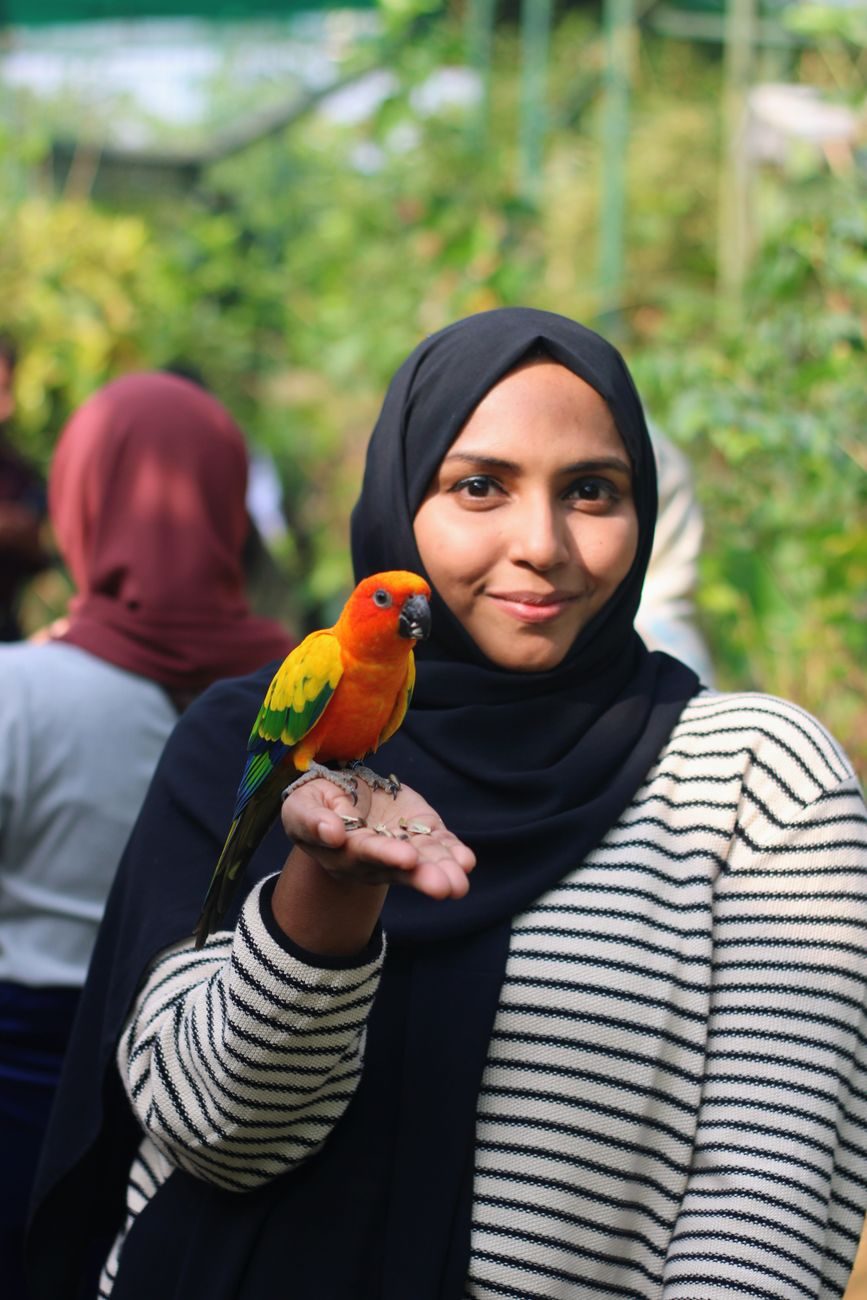
Sun conures are, by parrot standards, extraordinarily affectionate. A hand-raised bird will want to be on you — on a shoulder, inside a collar, under a chin — rather than near you. They are playful, acrobatic, comic, and they hold a grudge for about four seconds.
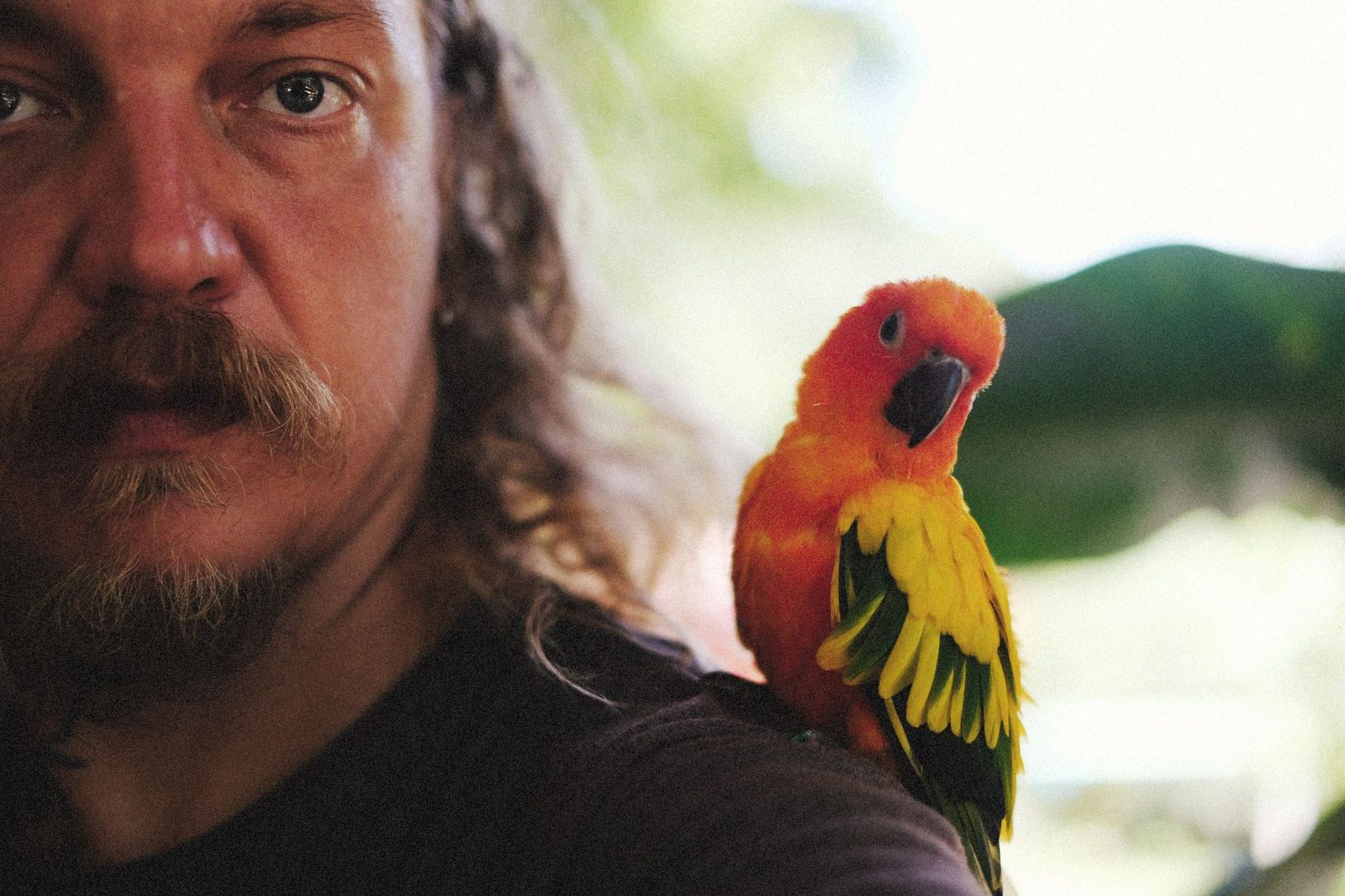
They are also intensely social, because in the wild they are never alone. A sun conure kept singly needs you to be its flock, and that means real interaction for several hours a day, not a cage in the corner of a room where people happen to walk past. Birds deprived of that develop the classic problems: relentless screaming, feather plucking, and in severe cases self-mutilation. Feather plucking in particular is much easier to prevent than to reverse.
They talk, but badly. Some birds pick up a handful of words in a scratchy, indistinct voice. If speech is what you want from a parrot, an African grey or an Amazon is a far better choice. Buy a sun conure for its personality and its colour.
Sexing is impossible by eye. The species is monomorphic — males and females look identical — so if you want to know, a DNA test from a feather or a drop of blood is the only reliable route, and most avian vets in Indian metros can arrange one.
Housing: the cage is a bedroom, not a house
Most cages sold for conures in India are too small. Treat roughly 60 × 60 × 75 cm as an absolute minimum for a single bird, and go larger if you can — horizontal space matters more than height for a bird that climbs and flies short distances. Bar spacing should be under 2 cm so the head cannot pass through, and the bars should be horizontal on at least two sides so the bird can climb.
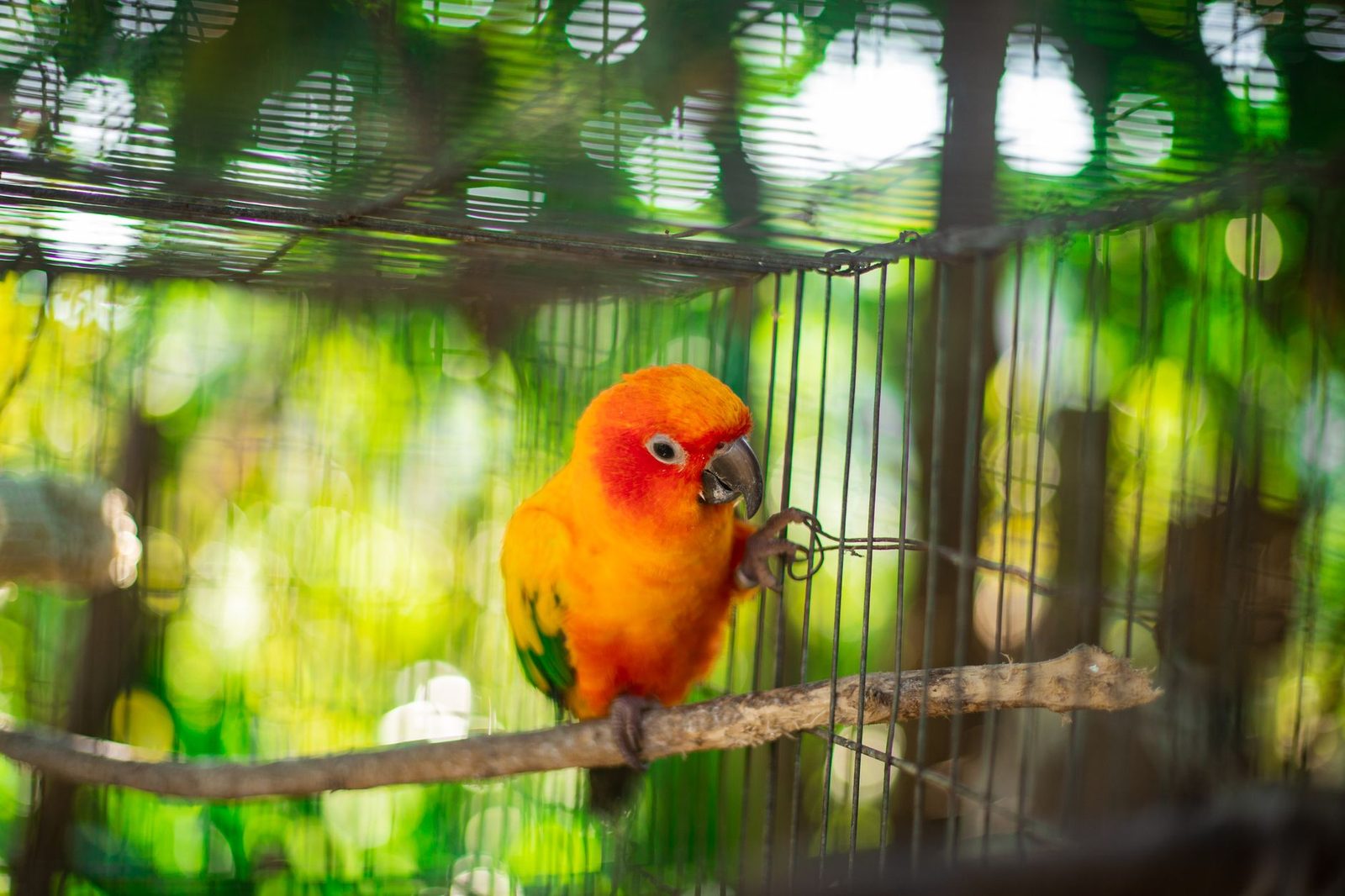
Inside, use natural-wood perches of varying diameters rather than uniform dowels — a single perch thickness causes pressure sores over years. Avoid sandpaper perch covers entirely. Provide foraging toys, shreddable material and something to destroy, and rotate them; a bored parrot with nothing to chew will find something of yours.
Place the cage against a wall rather than in the middle of a room, at roughly chest height, in a part of the house where the family actually spends time. Not the kitchen — more on that below — and not in direct afternoon sun. Cover at night for ten to twelve hours of dark, quiet sleep; sleep-deprived parrots become irritable and scream more.
The three things in an Indian home that kill pet birds
Birds have an extraordinarily efficient respiratory system, which makes them exquisitely vulnerable to airborne toxins. The three most common causes of avoidable death in Indian households are all everyday objects.
- Non-stick cookware. PTFE-coated pans, when overheated, release fumes that are lethal to birds within minutes and are completely undetectable to humans. This is the leading cause of sudden pet-bird death in homes that use non-stick pans. Keep the bird well away from the kitchen, ensure strong ventilation, and if you can, switch to steel or iron.
- Mosquito coils, incense and agarbatti. Continuous smoke in an enclosed room damages a bird's air sacs. Liquid vaporisers and aerosol sprays carry the same risk. If you must use them, not in the bird's room, and ventilate thoroughly before the bird returns.
- Ceiling fans. A flighted bird and a running ceiling fan in the same room is a genuine and frequent cause of injury and death. Fans off before the bird comes out, every single time, without exception.
Add to that list: teflon-coated appliances such as some irons and air fryers, scented candles, strong cleaning chemicals, and cigarette smoke. And keep the bird away from open windows and unscreened balconies — a startled conure can be a kilometre away before you have reached the door.
Feeding a parrot properly
An all-seed diet is the commonest cause of a short parrot life. Seed mixes are fat-heavy, deficient in vitamin A and calcium, and birds selectively eat their favourites and leave the rest, which makes an already unbalanced diet worse. Fatty liver disease and vitamin A deficiency in pet conures are almost always dietary.
A good diet is built like this:
- A formulated pellet as the base, making up roughly 60–70% of intake.
- Fresh vegetables daily — carrot, capsicum, leafy greens, peas, sweet potato, broccoli. Dark orange and dark green vegetables carry the vitamin A that seed diets lack.
- Some fruit — papaya, apple (no seeds), banana, guava, mango. Sugary, so smaller portions.
- Seed as a treat and a training reward, not as the meal.
Never feed: avocado, chocolate, caffeine, alcohol, onion, garlic, apple seeds and most fruit pits, or salty and fried human snacks. Avocado and chocolate in particular are seriously toxic to parrots even in small quantities.
Fresh water twice a day, in a bowl the bird cannot easily foul, and remove uneaten fresh food within a few hours — in Indian heat it spoils fast.
Taming, and the first month at home
A hand-raised sun conure arrives already used to people, but it does not yet know you. The first month is about becoming a safe presence rather than about training tricks.
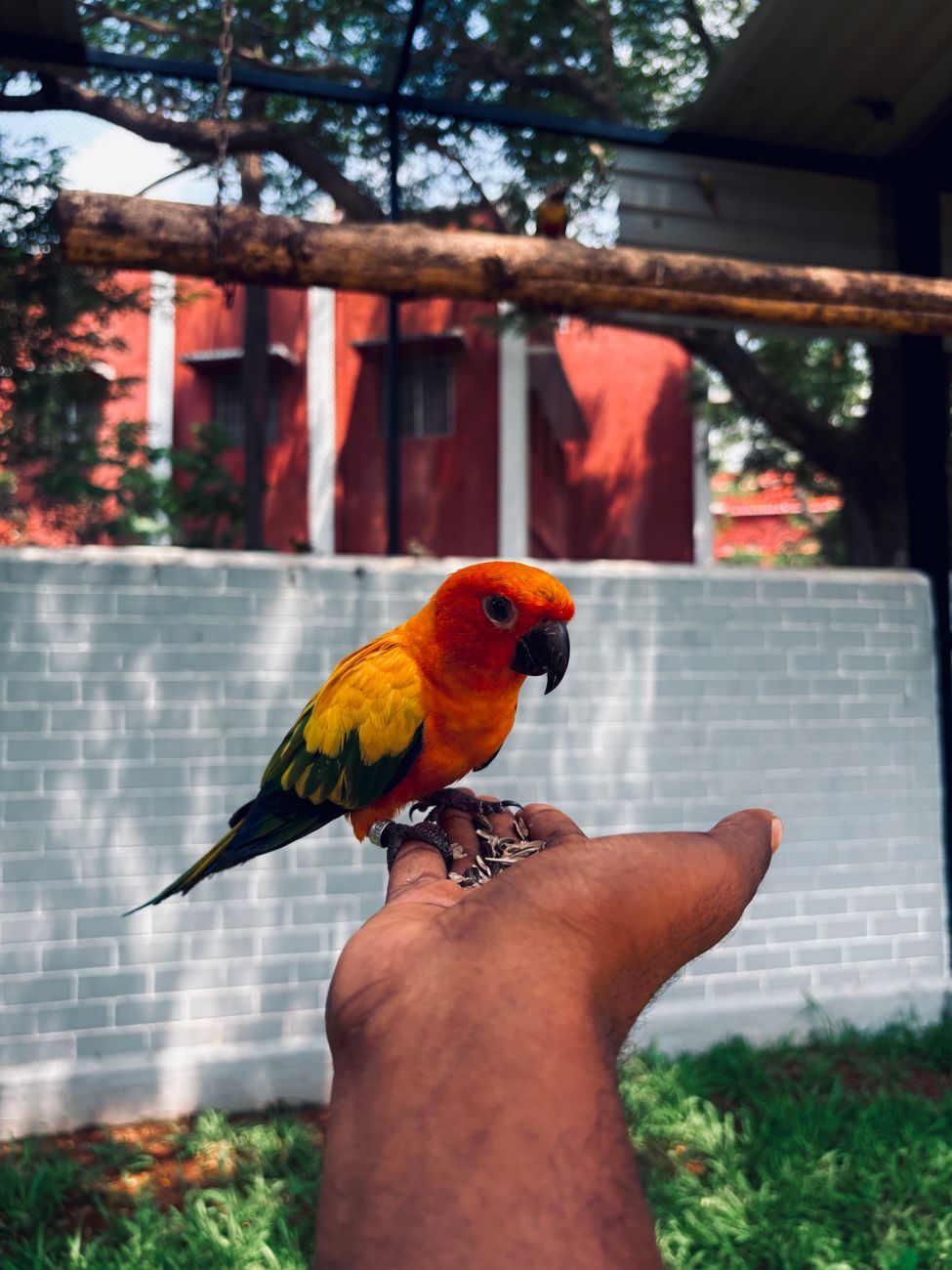
Give the bird three or four days to simply sit in its cage in a busy room and watch the household. Talk to it, move calmly nearby, and do not reach in. When it stops backing away as you approach, start offering a favourite seed through the bars, then from a flat palm inside the cage, then ask for a step up onto a finger pressed gently against the lower chest. Each of those stages can take days, and rushing any of them costs weeks.
Two rules make the difference. Never grab a conure — being seized from above is what a predator does, and a bird that learns hands are threats is hard to win back. And never punish a bite; drop your shoulder or end the session calmly, because shouting is dramatic and attention-rewarding to a parrot.
Clip nothing without advice. Wing clipping is contentious, frequently done badly, and a fully flighted bird in a properly bird-proofed home is generally a fitter, more confident animal.
Health, and finding an avian vet before you need one
Birds hide illness. It is a survival instinct: a parrot that looks unwell in the wild is a parrot that gets eaten, so by the time a pet bird looks obviously sick it has usually been ill for some time. This makes small changes important.
Signs that warrant a vet promptly: sitting fluffed up at the bottom of the cage, tail bobbing with each breath, any discharge from nostrils or eyes, a change in droppings that persists beyond a day, sudden weight loss, or a bird that stops talking and playing. A kitchen scale that reads in grams is one of the most useful things a bird owner can own — weigh weekly, and a drop of ten per cent is a red flag.
Common problems in pet conures include vitamin A deficiency and fatty liver from poor diet, feather-destructive behaviour from boredom or stress, respiratory infection, and psittacosis. Most are preventable with diet, enrichment and hygiene.
Find an avian vet before you need one. A general small-animal vet is not a bird vet, and the difference is stark in an emergency. Identify the nearest avian-experienced practice, save the number, and take the bird for a well-bird check within a fortnight of bringing it home.
What a sun conure costs in India
A hand-raised sun conure from a legitimate breeder starts at around ₹10,500. Colour mutations — the red-factor and hyper-red birds — run dramatically higher, into the tens of thousands and beyond, because they are far scarcer.
The bird is not the expensive part. The setup is.
| Cage of adequate size | ₹6,000 – ₹15,000 (one-time) |
| Perches, play stand, toys | ₹3,000 – ₹6,000 (one-time) |
| Pellets, fresh food, supplements | ₹1,200 – ₹2,500 / month |
| Replacement toys (they destroy them) | ₹400 – ₹900 / month |
| Realistic monthly total | ₹1,600 – ₹3,400 |
Then multiply by twenty-five years, and add avian veterinary care, which is specialised and priced accordingly.
Who should not get a sun conure
- Anyone in a shared-wall flat with noise-sensitive neighbours. This is the first filter, and most people fail it.
- Households out of the house for ten hours a day. A lone, unstimulated conure develops behavioural problems that are genuinely difficult to undo.
- Anyone who wants a talking parrot. Choose an African grey or an Amazon instead.
- Homes with infants or very young children. A frightened conure bites hard, and a 100 g bird is easily injured by a toddler.
- Anyone unwilling to give up non-stick cookware, mosquito coils or unrestricted ceiling-fan use.
- Anyone who cannot plan for a bird that may outlive their current home, job and city. Include the bird in your long-term thinking, or do not buy one.
So, is a sun conure right for you?
If you are home a lot, you genuinely like being climbed on, you can bird-proof your house, and the noise does not frighten you off — a sun conure is one of the most rewarding companions available. They are funny, brilliantly coloured, unreservedly affectionate, and they will greet you every single day for a quarter of a century as though you have been gone a year.
If the shrieking, the daily hours, or the twenty-five-year horizon give you pause, that hesitation is worth trusting. There is no shame in choosing a cockatiel or a budgie instead — both are quieter, cheaper, gentler starter birds, and both are frequently the better answer.
At Nearby Pets India every sun conure is captive-bred and hand-raised from a verified breeder, health-checked before dispatch, with guidance on cage setup and diet included. If the noise or the time commitment does not suit your home, we would rather tell you that than sell you a bird.
Frequently asked questions
How loud is a sun conure really?
Loud enough to be the reason most of them are rehomed. A sun conure's contact call is a piercing shriek designed to carry across open forest, and it will use it several times a day regardless of training. You cannot train it out; you can only decide whether you and your neighbours can live with it. In a shared-wall flat, this is the deciding question.
Do sun conures talk?
Some learn a handful of words, but poorly and indistinctly compared with an African grey or an Amazon. Buy a sun conure for its temperament and colour, not for speech. If talking is the point, this is the wrong bird.
Why is my sun conure green and not orange?
Because it is young. Sun conures hatch olive-green and take roughly eighteen months to two years to burn through to full gold and orange. A green-tinged bird is a juvenile, not a different species and not a defect. Anyone selling a 'rare green sun conure' at a premium is selling you a baby.
How can I tell if my sun conure is male or female?
You cannot, by looking. The species is monomorphic, meaning both sexes look identical. The only reliable answer is a DNA test from a feather or blood sample, which most avian vets in metros can arrange.
What is dangerous in an Indian home for a conure?
Three things kill pet birds in Indian homes far more often than disease. Overheated non-stick cookware releases PTFE fumes that are lethal within minutes. Mosquito coils, incense and agarbatti smoke damage a bird's air sacs. Ceiling fans injure or kill birds in free flight. All three are avoidable, and all three are common.
How big should a sun conure's cage be?
Bigger than the one you will be sold. Treat roughly 60 × 60 × 75 cm as an absolute floor for a single bird, with bar spacing under 2 cm so the head cannot pass through. The cage is where the bird sleeps and eats; it should be out of it for three to four hours a day.
What should a sun conure eat?
A formulated pellet as the base, plus fresh vegetables and some fruit daily. An all-seed diet is the commonest cause of a short parrot life — it is fat-heavy and short of vitamin A and calcium. Avocado, chocolate, caffeine, alcohol and salty human snacks are toxic and must never be offered.
How much does a sun conure cost in India?
Around ₹10,500 for a hand-raised sun conure from a legitimate breeder. Colour mutations such as the red-factor birds run far higher. Add a proper cage, a play stand, pellets and an avian vet relationship, and the first year costs considerably more than the bird did.
Looking for a sun conure?
Browse hand-raised, health-checked sun conures and other exotic birds from verified breeders across India.
See available birds